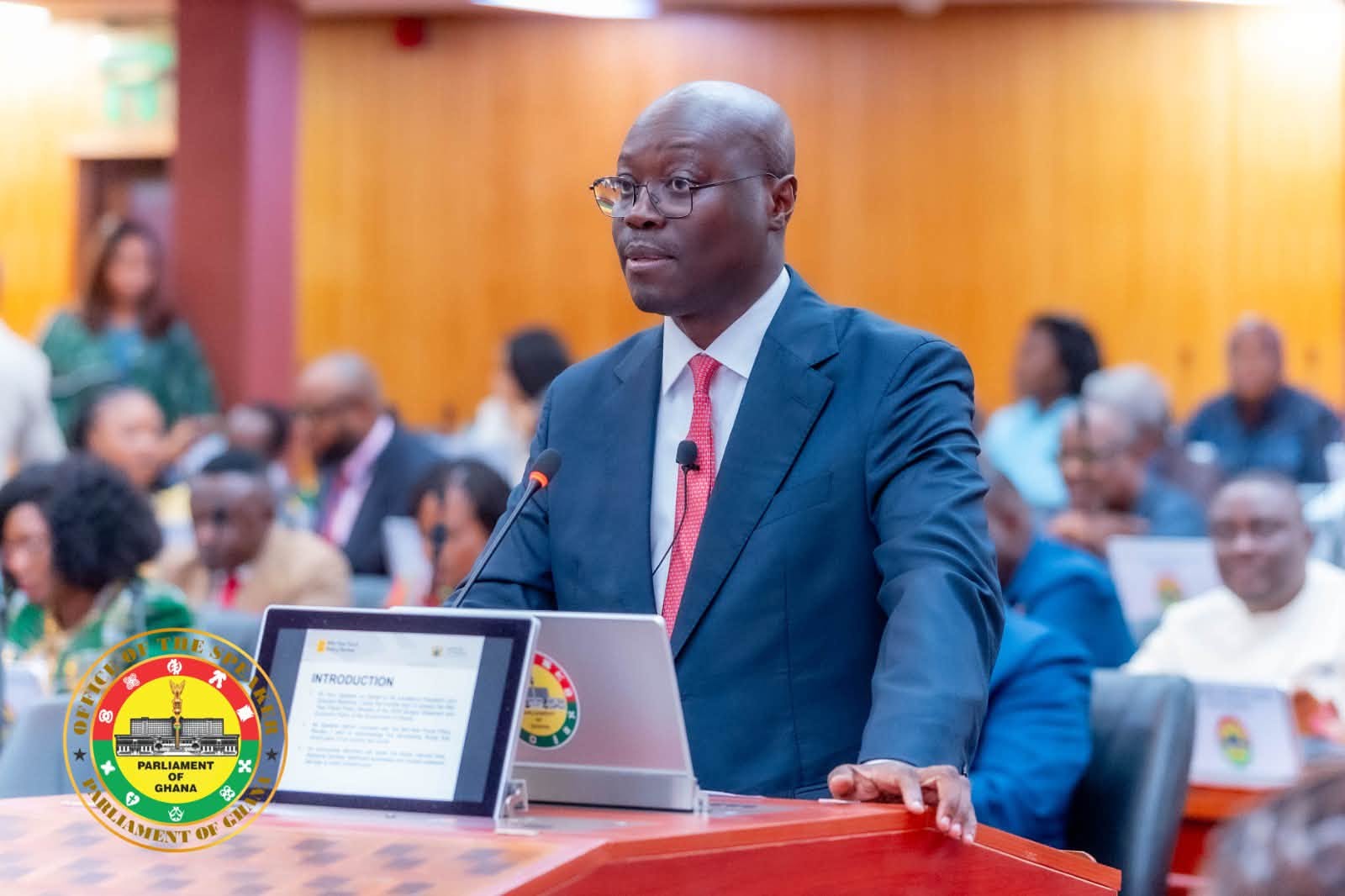
When Finance Minister Dr. Cassiel Ato Forson stood in Parliament for the 2026 Mid-Year Fiscal Policy Review, the headline was not what government planned to tax, but what it has taken away.
For the first time in many years, a mid-year review came with no new taxes. Instead, it confirmed the full implementation of the most sweeping tax relief package in recent memory; a package that has put GH¢5.7 billion back into the pockets of households and businesses.
Inflation has declined to 5.3 percent, from double digits. Government generated GH¢124.8 billion in revenue and grants in the first half, just 1.03% below target. Total cash expenditure was GH¢136.9 billion against a target of GH¢172.5 billion. Interest savings of GH¢6.9 billion were recorded, and GH¢5.3 billion in arrears to contractors and suppliers was cleared. It is within this context of fiscal discipline that the tax reset is holding.
The Taxes Scrapped
The centrepiece was the abolition of the COVID-19 Health Recovery Levy. Introduced in 2021 as a temporary 1% levy on goods, services and imports to fund pandemic recovery, the levy had outlived its purpose. Its removal alone will return GH¢3.7 billion to Ghanaians in 2026.
Second is the Electronic Transfer Levy (E-Levy). Generating over GH¢2 billion annually but widely criticised for discouraging mobile money usage and financial inclusion, the E-Levy was scrapped. The removal has already revived digital transactions and eased costs for SMEs and low-income earners who rely on mobile money.
Third is the 10% Withholding Tax on Betting and Lottery Winnings, popularly known as the betting tax. Projected to raise about GH¢300 million, it was abolished to restore confidence among the youth and encourage growth in the digital gaming sector.
Fourth, government has abolished VAT on mineral reconnaissance and prospecting. For years, exploration companies paid VAT on services before finding a single ounce of gold. Removing it lowers the cost of exploration and is intended to attract fresh investment into Ghana’s still vast untapped gold belts.
VAT Reset: From 21.9% to 20%
The government has restructured Value Added Tax itself to make it simpler and less burdensome. The effective VAT rate has been cut from 21.9% to a flat 20% following the abolition of the COVID levy.
More importantly, government has reversed the decoupling of the Ghana Education Trust Fund (GETFund) Levy and National Health Insurance Levy (NHIL) from the VAT base. Businesses can now claim GETFund and NHIL as input tax, allowing them to offset it against VAT liabilities. This alone reduces the cost of doing business by 5% and ends the phenomena of cascading taxation.
To protect small businesses, the VAT registration threshold has been raised from GH¢200,000 to GH¢750,000, moving thousands of micro and small enterprises into a simplified modified tax regime and freeing them from complex VAT filing processes.
And to protect local industry, the VAT zero-rating on locally manufactured textiles has been extended to the new 2028, allowing local textile firms to not charge VAT on their products, while reclaiming input VAT, thereby frees working capital.
Altogether, the Ministry of Finance estimates these VAT reforms return GH¢2 billion in addition to the COVID levy relief, bringing the total relief to GH¢5.7 billion.
Payoff of Fiscal Restraint
The first-half performance was the strongest ever recorded in many years, revenue was broadly on track, expenditure was below target for the right reasons, and fiscal balances exceeded programme targets.
The revenue mix tells the real story. Taxes on income and property came in at GH¢57.5 billion, beating the GH¢53.2 billion target by GH¢4.3 billion, driven by stronger corporate tax receipts. That reflects improved private sector profitability, helped by falling interest rates and a stable cedi.
The bright spot was the Energy Sector Levy, which brought in GH¢7.7 billion against a target of GH¢4.2 billion, with the Energy Debt Recovery Levy contributing at least GH¢1 billion monthly to clear legacy energy debts.
Upstream oil and gas revenue was softer at GH¢6.3 billion versus GH¢9.1 billion target, but non-oil domestic mobilisation proved resilient.
No New Taxes, Better Compliance
The second half of 2026 will not bring new taxes, the strategy is compliance, not burden.
To safeguard revenues, government is deploying Fiscal Electronic Devices for real-time transaction tracking, systems to tax cross-border digital transactions by non-resident platforms, a VAT Reward Scheme to incentivise consumers to demand receipts, and a new port system where the Bank of Ghana will match every foreign exchange transfer to a verified import data to curb smuggling and under-invoicing.
This is the pivot to a Policy Coordination Instrument (PCI) after the IMF Extended Credit Facility, moving from externally imposed stabilisation to self-reliant management.
The Reset That Holds
For years, mid-year reviews meant new levies to plug holes. This one meat relief, because government spent less than planned and collected almost what it planned without creating new debts.
Discipline without investment kills jobs, but fiscal discipline is the foundation. The GH¢6.9 billion saved on interest can now fund schools, clinics, roads, or pay down debt faster.
The message from the Mid-Year Review is reassuring, government has removed the E-Levy, COVID Levy, betting tax, and VAT on exploration; cut effective VAT to 20%; allowed input claims on GETFund and NHIL; and raised the threshold to GH¢750,000 and still kept the economy on track.
The reset, as presented, is holding.
End.
Written by: Moses Sackie, Head of Information, Embassy of Ghana, People’s Republic of China.