Ghana at the Centre of History Again
In June Accra became the global capital of justice, remembrance and forward planning as Ghana hosted the historic High-Level Next Steps Conference on Reparatory Justice.
Convened at the Accra International Conference Centre (AICC) under the auspices of H.E. John Dramani Mahama, President of the Republic of Ghana and African Union Champion for Advancing the Cause of Justice and the Payment of Reparations to Africans, the Conference marked a decisive shift from advocacy to action following a landmark victory at the United Nations.
It was not just a conference. It was a statement of Africa’s resolve, Ghana’s leadership, and the global community’s readiness to confront one of humanity’s gravest crimes and to chart a common future anchored in justice, partnership and sustainable development.
From UN Resolution to Accra Action
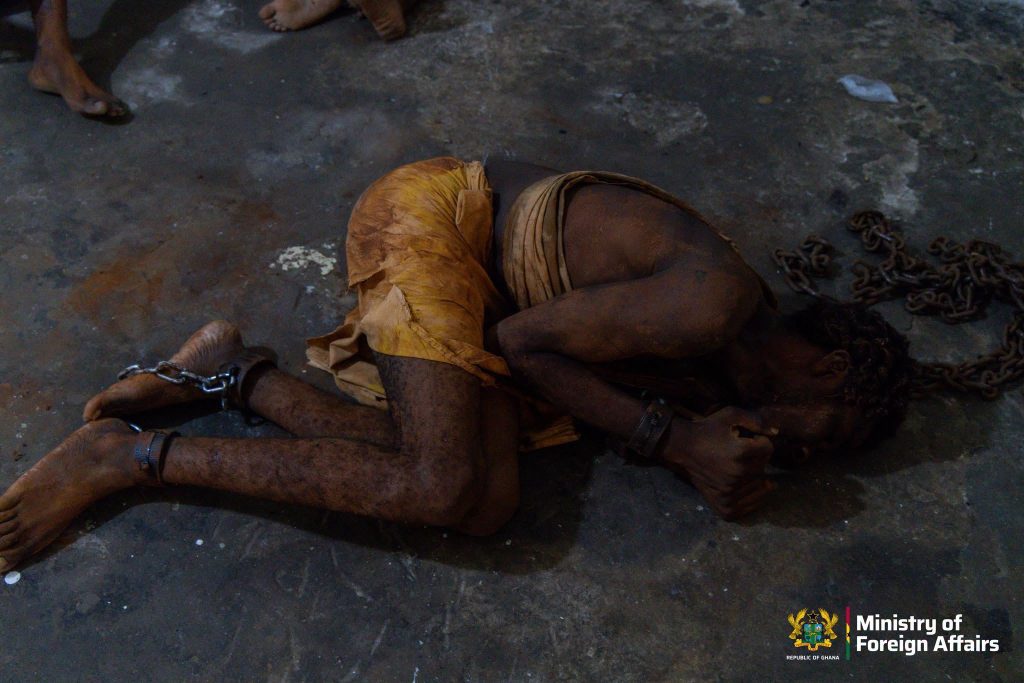
The road to Accra began in New York on March 25, 2026. On that day, the United Nations General Assembly adopted by consensus Resolution A/RES/80/250, which formally declared the trafficking of enslaved Africans and the racialised chattel enslavement of Africans as the gravest crime against humanity.
The Resolution, initiated by Ghana and co-sponsored by a broad coalition, received the support of 123 Member States. It was described by the Ministry of Foreign Affairs of Ghana as a significant milestone in advancing global acknowledgment of historical injustices and the need for structured engagement on reparatory justice.
The Resolution did not seek to apportion blame for retribution, but to establish a factual and moral foundation for structured global engagement on recognition, restitution, reparation and reconciliation.
To give meaning to that foundation, Ghana, in its capacity as AU Champion, offered to host the first post-adoption consultative conference, The Next Steps Conference.
The objective, as stated by the Government of Ghana was clear, thus “translating the historic Resolution A/RES/80/250 into a common actionable global framework” with coordinated policy approaches, institutional frameworks, and mechanisms to sustain international engagement.
Scale, Participation and Significance
The Conference assembled an unprecedented coalition of actors. Heads of State and Government, Foreign Ministers, diplomats, academics, jurists, historians, traditional leaders, youth leaders, activists, and representatives of the African Diaspora from Africa, the Caribbean (CARICOM), Europe, North America, Latin America and Asia converged in Accra.
High-level attendance included President Bassirou Diomaye Faye of Senegal, President Joseph Nyuma Boakai of Liberia, President Netumbo Nandi-Ndaitwah of Namibia, Prime Minister Mia Amor Mottley of Barbados, and President Adama Barrow of The Gambia, alongside delegations of the 123 UN Member States that supported the Resolution.
Over three days, plenary sessions, thematic panels and closed consultations focused on five pillars; Legal and Historical Foundation; Economic Restitution and Development Financing; Cultural Restitution and Heritage Preservation; Education, Remembrance and Psychological Healing; and Institutional Architecture for Implementation.
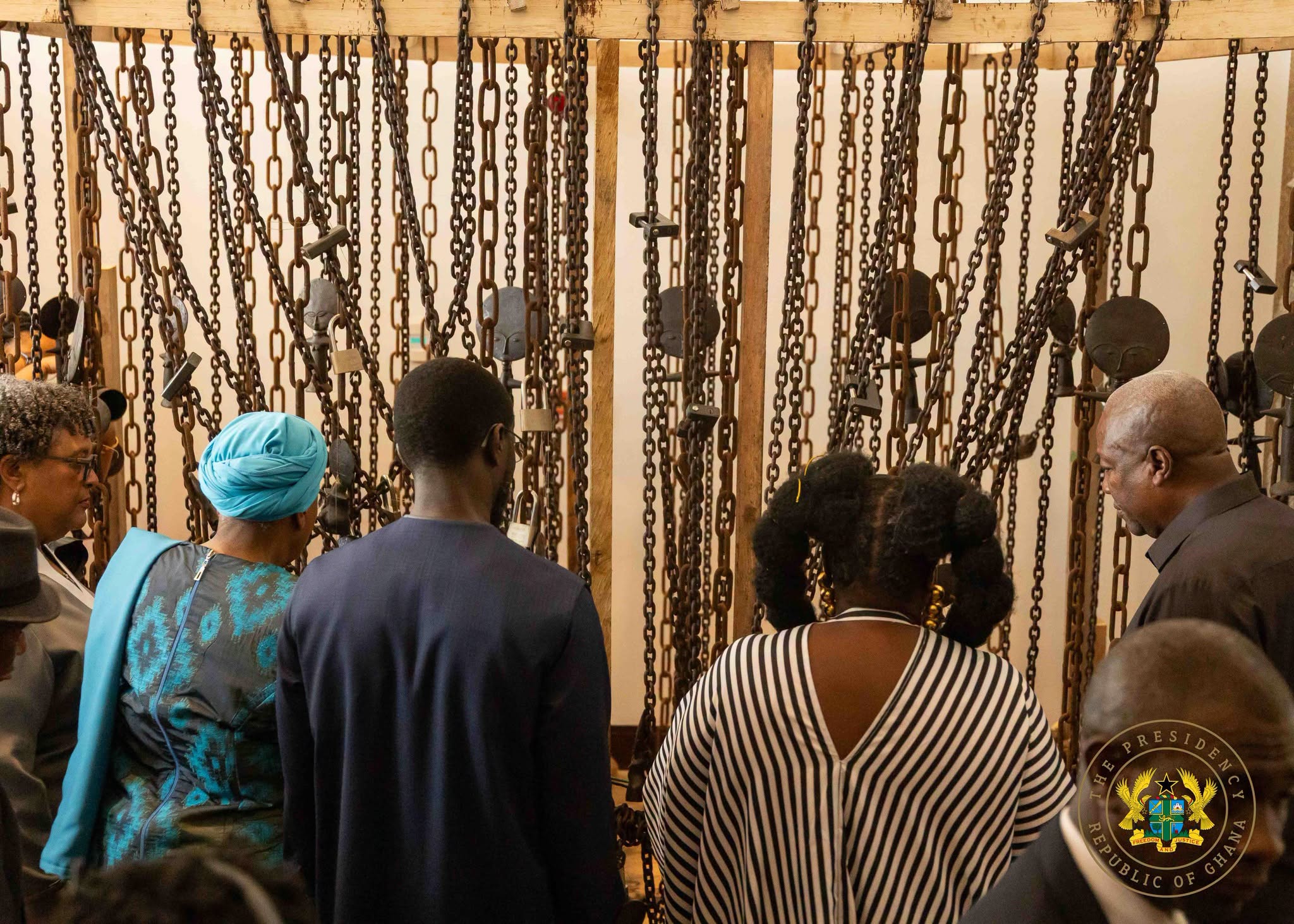
A defining moment of the Conference was the special Juneteenth Commemoration held on June 19 at the Christiansborg Castle in Osu. The Government had earlier noted that the site was chosen for its profound historical relevance to the Trans-Atlantic Enslavement and that the event would serve as a memorable climax of the Conference, while promoting remembrance, recognition, healing and a quest for justice.
Under torchlight, with libation, music and interfaith prayers, delegates honoured the millions whose lives were lost, reaffirming the Conference motto, ‘Never Again’.
The Accra Next Steps Commitments
The Conference concluded on June 20 with the adoption of a comprehensive outcome document: “Accra Next Steps Commitments on Reparatory Justice.”
The document was adopted by Heads of State, ministers, diplomats, academics, civil society leaders and representatives of the African diaspora and is aimed at advancing reparatory justice for Africans and people of African descent worldwide.
The Commitments outline a broad roadmap for implementing the UN Resolution, moving the agenda beyond recognition towards concrete implementation.
Major outcomes:
– Global Implementation Framework: Agreement to establish a Technical Working Group to develop a time-bound global implementation matrix for Resolution A/RES/80/250, with clear roles for the AU, CARICOM, UN agencies and Member States.
-Institutional Architecture: Proposal for a Permanent Secretariat for Reparatory Justice to be anchored within the African Union system, with liaison offices in the Caribbean and New York, to coordinate policy and research.
-Thematic Panels: Establishment of three expert panels, thus Legal and Reparations Finance, Cultural and Heritage Restitution, and Education and Memorialisation, to provide technical advice and draft model frameworks within 12 months.
-Diaspora and Global South Solidarity: Formalisation of an Annual Transcontinental Forum on Reparatory Justice, rotating between Africa, the Caribbean and the Americas, to sustain political momentum and people-to-people ties. The government had earlier stated the Conference would strengthen Africa’s collective voice and deepen engagement with the African diaspora and global partners.
-Forward-Looking Actions: As anticipated, the outcomes include a set of recommendations and forward-looking actions to guide subsequent engagements at the continental and international levels, including curriculum reform, digitisation of slave trade archives, and support for creative economies.
In his closing address, President Mahama noted that Accra had not only hosted a conference but had ignited a movement, one that must deliver dignity and development.
Beyond Justice: What It Means for Ghana’s Economy and Tourism
While the moral imperative of the Conference is paramount, its strategic dividends for Ghana’s economy, particularly the tourism sector, are immense.
For decades, Ghana has successfully leveraged heritage tourism, most notably through the Year of Return (2019), Beyond the Return, and Destination Ghana. The Next Steps Conference has exponentially amplified that equity.
With global media coverage from over 300 international outlets and livestream viewership from all continents, Ghana’s heritage assets, the Christiansborg Castle, Cape Coast Castle, Elmina Castle, Assin Manso Slave River, etc. have been re-projected to the world.
The Conference also showcased Ghana’s Meetings, Incentives, Conferences and Exhibitions (MICE) capacity. Successfully hosting Heads of State and over 2,000 delegates proves Accra’s readiness for large-scale global events, boosting confidence in Ghana’s hospitality value chain such as airlines, hotels, transport, catering, creative arts and security.
New Window for Ghana-China Tourism Partnerships
For China, the 5th largest outbound tourism market to Africa and Ghana’s key partner in infrastructure and trade, the Conference opens a new, timely window.
– Investment Opportunity: Ghana’s tourism sector requires significant capital in heritage site preservation, eco-lodges in the Volta and Western regions, 5-star hotels in heritage corridors, and amusement and cultural villages. Chinese private sector, with proven expertise in construction, hospitality technology and mass tourism management, is invited to invest under PPP arrangements facilitated by the Ghana Tourism Development Company and the Ghana Investment Promotion Centre.
-Market Access: Over 150 million Chinese tourists travel abroad annually. Ghana, with its stability, English proficiency and e-visa facilitation, can become a preferred long-haul cultural destination. The Conference creates the narrative hook for Chinese travel agencies to develop “Roots and Renaissance” tour packages, combining Accra, Kumasi, Keta, Cape Coast with Chinese-funded projects like the National Theatre and cultural infrastructure.
-Cultural Diplomacy China’s long-standing support for the 123-member coalition at the UN and its abstention-free constructive engagement positions it as a partner in the justice agenda. Tourism becomes a tool of people-to-people connectivity, a core pillar of the Belt and Road Initiative’s people-to-people bond.
-Direct Linkages: Ghana’s Embassy in Beijing, led by H.E Ambassador Kojo Bonsu, will leverage the momentum to advocate for increased air connectivity discussions, tourism roadshows in Guangzhou, Shanghai and Chengdu, and B2B matchmaking between Ghanaian tour operators and Chinese outbound operators.
In essence, the Next Steps Conference repositions heritage from the past to an economic asset for the future. For Ghana, it is jobs, foreign exchange and community development. For China, it is access to a high-growth, high-meaning market.
From Remembrance to Partnership
The Accra Next Steps Commitments have given the world a roadmap. The Juneteenth lights at Christiansborg Castle have given the world a memory. What remains is partnership.
As Ghana’s official representation in China, the Embassy of Ghana in Beijing stands ready to facilitate this new chapter. We invite Chinese investors, cultural institutions, airlines and tourists to come, invest, visit and explore.
Ghana is open. Ghana is ready. And after Next Steps, Ghana’s story is even more compelling for partners seeking meaning, market and mutual respect.
Written by: Moses Sackie, Head of Information, Embassy of Ghana, People’s Republic of China.